le interviste del direttore
Un sogno con il brand Berlucchi: «L’Oltrepò come la Franciacorta»
Manila Alfano

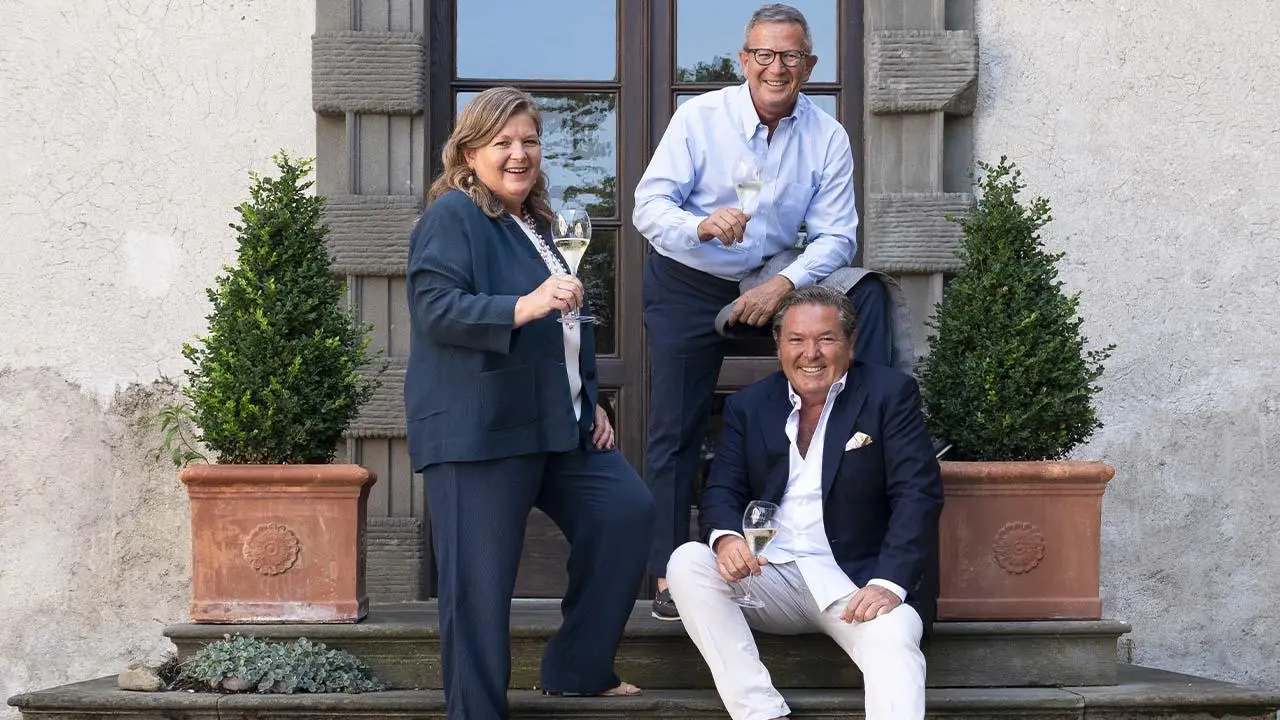
Paolo Ziliani co-owns the Berlucchi label with his siblings; the winery acquired Vigne Olcru in Santa Maria della Versa in 2023. «Classese gives the region its identity»
When an entrepreneur's gamble is driven by the desire to match his father's success, the venture becomes more than a business undertaking—it becomes a true passion. Paolo Ziliani, who owns Guido Berlucchi together with his siblings—the winery that helped give rise to Franciacorta—has a dream: "I want to follow my father's example and do for the Oltrepò Pavese what he did for Franciacorta in the early 1960s, when he got the Berlucchi company off the ground and, with it, the entire region."
What potential do you see in the Oltrepò Pavese?
«In 2023 we acquired Vigne Olcru in Santa Maria della Versa. We started with about eight hectares, mostly planted with Pinot Noir. Today we have around twenty hectares, precisely because I see enormous potential in this land—much of it still waiting to be discovered and fully expressed. Everything is in place here to produce a great wine that will become increasingly appreciated.»
What has the area lacked until now?
«One reason for Franciacorta's success is the unity among its producers. Each of us has our own label, and of course we compete in the marketplace—there's us, there's Ca' del Bosco—but when it comes to the product itself, we stand together.»
But Franciacorta has been a major international player for years.
«Yes, but we started from scratch. My father set this entire movement in motion, starting from nothing.»
How did your father get started?
«My father had great intuition, which he put to good use when he met Count Berlucchi. They connected immediately and together created what the company still is today: a label that can hold its own against any other in the world.»
How did they meet?
«The Count wasn't satisfied with the wine the local farmers were producing from grapes grown on his land. He was looking for something more, something different, without quite knowing what. Then he met my father.»
A fateful meeting?
«I'd say so. There was an immediate rapport between them. My father, Franco, had studied enology at the prestigious school in Alba. He was a highly skilled technician, but above all he had one particular passion.»
What was it?
«As a boy, his father—a wine merchant—gave him a glass of Champagne to taste. He was completely captivated by it, and from that moment on, the desire to create a wine that could match it never left him. Then came the day he met the Count. The Count showed him his seventeenth-century cellars, and my father told him at once about his dream of making a Champagne-style wine in Franciacorta. They understood each other immediately, and set out with the enthusiasm that characterized the great business ventures of the 1960s.»
Were they successful right away?
«The first bottle of Berlucchi Pinot di Franciacorta dates back to 1961—we keep it in a display case. The first two or three years were spent correcting practical mistakes. They were inexperienced, and no one had ever done what they were attempting.»
Did sparkling wine not exist at the time?
«There was Moscato d'Alba, which was sweet; there was Prosecco in Veneto and Ferrari sparkling wine in Trentino—but the boom of the past twenty-five years hadn't yet begun.»
Why was Berlucchi successful so quickly?
«First and foremost, because of the quality of the product. And then because of a number of circumstances, some of them fortunate.»
Such as?
«One above all: a photograph of Raul Gardini aboard his yacht, Il Moro di Venezia, flanked by two bottles of Berlucchi, appeared on the front page of Corriere della Sera. That image sparked the curiosity of entrepreneurs, industrialists and high-spending consumers—though we'd already been earning recognition from restaurateurs. The finest restaurants had already chosen us.»
Why produce Classese in the Oltrepò Pavese?
«Without an identity, there can be no growth. And I must say we got off to an excellent start: 96 percent of the assembly voted in favor. Producers came together and acted in unison to approve the Classese production regulations.»
What does that change in practical terms?
«It means we producers have imposed rules on ourselves that lead to a high-quality product, because we've understood the value of making sparkling wine from Pinot Noir. For some time now, the Oltrepò Pavese has been pursuing a strategy aimed at rebuilding its identity around Classese, its traditional-method sparkling wine. In the past, that identity was also diluted by six other appellations alongside Classese. We believe the focus should be on traditional-method sparkling wine.»
Quite a gamble.
«Let's say it's part of the job—but we're convinced we have an excellent foundation. This land can truly express enormous potential, and we believe Italian sparkling wines can make just as strong an impression as Franciacorta did. Now it's the Oltrepò Pavese's turn, with Pinot Noir»
What will we be drinking in the future?
«I believe that over the next twenty years sparkling wine consumption will grow, because it suits convivial occasions so well. Italy has a distinctive range of sparkling-wine appellations that are neither huge nor small—Franciacorta, Trento Doc, Alta Langa. They're gaining ground both domestically and internationally, partly because consumers want to discover new products and look for a sense of identity in wine. From this perspective, the Oltrepò Pavese must not lose its own identity if it wants to keep growing.»
©️ ALL RIGHTS RESERVED

